Tag Archives: Featured

Sweet Spring

Today’s post comes to us from Barbara in Rivertown

In honor of it finally being April, and spring being so much more believable, I have rediscovered a favorite poem, taken from the Good Reads website:

                                                                   Sweet Spring            E.E. Cummings

sweet spring is your
time is my time is our
time for springtime is lovetime
and viva sweet love

(all the merry little birds are
flying in the floating in the
very spirits singing in
are winging in the blossoming)

lovers go and lovers come
awandering awondering
but any two are perfectly
alone there’s nobody else alive

(such a sky and such a sun
i never knew and neither did you
and everybody never breathed
quite so many kinds of yes)

not a tree can count his leaves
each herself by opening
but shining who by thousands mean
only one amazing thing

(secretly adoring shyly
tiny winging darting floating
merry in the blossoming
always joyful selves are singing)

sweet spring is your
time is my time is our
time for springtime is lovetime
and viva sweet love

Do you have a favorite poem, or a favorite poet?  (Doesn’t have to be well-known.)


Family Names

My father’s family is from Ostfriesland, an area of Northwest Germany bordered by Holland and the North Sea.  Their language was Frisian/Low Saxon.  They were the people of Beowulf, and they invaded the British Isles early and were in turn invaded by the Romans, the Franks, the Saxons, the Vikings, Germanic tribes, and so on.  My ancestors were simple, poor farmers, and my did they have funny names.

I have tried to build family trees using the data bases in Ancestory, and I have found the most wonderful and weird names (actually, Wiard is one of their names). I can only imagine the trouble people had to go to to do this genealogy work, since there was a very unusual naming system, called Patronymics, used in the area until Napoleon invaded and ordered everybody to settle on a permanent last name. The system didn’t die out until the 1830’s. According to a German researcher named Ines Weissenberg, this is how first names were derived in Ostfriesland:

The first male child was named after the paternal grandfather.

The second male child got the name of the maternal grandfather.

First and second daughter were named after paternal and maternal grandmothers.

The third son was named after his father.

The fourth son was named after the father’s paternal grandfather.

The third daughter was named after the mother.

The fourth daughter was named after the mother’s paternal or even maternal grandmother.

Then, there were also other aspects of choosing a first name such as reusing a deceased child’s name for the next child of the same sex and naming the first daughter/son of a subsequent marriage after the deceased former spouse. These rules expressed the belief that a person continued to live through the descendants.

Last names were even more confusing, since your last name was usually your father’s first name.  If a man called Harm had three sons named Gerd, Jan, and Menno, their last name would be Harms, indicating they were Harm’s sons.  If Gerd had children, their last name would be “Gerdes”.  Jan’s children would have the last name “Janssen”, and Menno’s children would have the surname “Mennen”.  Last names changed from generation to generation.  The same names were used for first and last names.

One of my ancestors named Okke Poets had a son named Poet Okkens.  Lubbe Habben, a far distant grandmother, had a daughter she named Gretje Lubbens.  Zeede Ecken and her husband Riko Fredrichs name their son Ecko Riken, after her father, Ecko Focken.

Gertien, Taalke, Gretje, Geert, Geske, Mimke, Trienke, Lauke, and Evertje are some of the more wonderful women’s names I have found in my family.  Freerk, Harm, Weert, Wiard, Folkert, Heyke, Okke, Ullfert, Harrameke were some of the men’s names. Ostfriesland is no further than about 50 miles from places like Bremen, where people had names like Otto, Lena, Ernst, and Dora.

My name, using this system, would be Tilla Jacobs. My husband would be Christian Williams. Our son would be William Christians. Daughter would be Evelyn Christians.  How confusing.


Go back a couple of generations and figure out some family names for yourself using Patronymics.

Stories We Tell Ourselves

At my book club (my other book club) last weekend, after we had lunch, my friend Rita brought out some fabulous-looking brownies. As if that weren’t enough, she then brought out vanilla ice cream.  As she scooped the ice cream onto the plates with the brownies, she said “the ice cream helps cut the sweetness.”  We all laughed and then someone commented that if we had Diet Coke, it would counteract the calories as well.  And we laughed some more.

What “story” do you tell yourself?

caution – brains at work

today’s musings from our tim.

words on a page
sounds in your ear
images in your brain either put before to absorb or conjure
it is all there is
 
be careful of what you put in you queue,
you are what you think about all day long

what are you thinking about these days?

The Mystery of the Boxes in the Field House

Today’s post comes to us from Steve.

Few of us encounter mysteries, I think. Life is usually dull. But now and then something seems wrong. Something doesn’t make sense.

As a hunter and fisherman, I always had a secret dread of being the person who would discover a corpse. Murderers often discard bodies in remote areas, I’ve read, and I spent much of my life blundering about in remote places. In the back of my head I always worried I would be tramping around looking for a grouse when I would find someone’s decaying arm sticking out of the ground from a shallow grave. For example, a murder victim was once hidden in Carlos Avery Wildlife Management Area, and I used to hunt there. 

My sister once became curious about family history. By snooping around in old boxes she turned up old court records revealing the existence of a legal half-brother that our parents had never mentioned. It seemed a shocking family scandal.

The truth turned out to be much less exciting. My father was accused of fathering a child by a young woman who became pregnant out of wedlock in the 1930s. The charge was false, our parents explained calmly. At the time there were no scientific ways to prove or disprove paternity in what lawyers called “bastard cases.” My dad’s lawyer told him to plead guilty and to pay the unwed mother, who wanted $200 to cover maternity bills. The story was funny rather than shocking, and it involved a cow sculpted from butter. Some friends of this web site know the whole story, for I wrote about it in my unpublished book about my family.

I have led a mostly boring life, and yet there once was a mystery that excited my imagination.

In my home town of Ames, Iowa, there was a curious round brick building near the high school football field and track arena. The “Field House” began life as a shelter for Chautauqua attendees in 1928. The Chautauqua movement was a fascinating development that flourished in early decades of the 20th century. The building was later built up to form an odd round brick structure that hosted athletic events. By the time I was a kid in Ames the Field House was boarded up and unused.

One day in 1960 some friends and I happened to look in the windows of the old field house. It was filled with an astonishing number of cardboard boxes stacked to the ceiling. We had never seen so many boxes in one place. Each one was identical, and each bore the word “Crest.” What was in those boxes? Why would anyone stockpile many thousand boxes in an abandoned building? Was this some secret government program?

Before long, we understood the mystery of the Crest boxes. For decades Procter and Gamble had been experimenting with toothpaste formulas. In the 1950s P & G learned that adding stannous fluoride to their paste would radically reduce cavities among people who faithfully brushed with Crest.

But consumers were slow to pick up on this. In the absence of truth in advertising legislation, people hawked miracle products to cure everything from cancer to arthritis to “wind in the belly.” Our family doctor once confessed that he went to medical school on the profits of some “snake oil” cure-all that his grandfather sold in little bottles. If such little bottles were filled with flavored alcohol, they usually sold well. In my own childhood the marketplace promoted such dubious products as Geritol (a cure for “tired blood”) and Carter’s Little Liver Pills.

Crest toothpaste, which actually reduced dental disease by 40 percent, only claimed ten percent of the toothpaste market in the 1950s. Then the American Dental Association conducted studies that confirmed the effectiveness of fluoride. The ADA had never endorsed a product before. In 1960 the ADA officially named Crest as the only toothpaste that reduced cavities. Knowing that this announcement would hit the market like a bombshell, P & G went into feverish production and filled warehouses with boxes of Crest in the months before the announcement was released. The old field house in Ames was one of many such stockpiles. Crest dominated the toothpaste market for decades until the practice of adding fluoride to drinking water reduced the need for fluoridated toothpaste.

Have you ever discovered a mystery?


Kindness Gone Wild

Today’s post is from Bill.

Our conversation about kindness brought to mind a story told by my elder daughter.

She returned to her third floor condo having bought some greens at the farmer’s market. On the greens, when she went to wash them, she found a worm. Now you or I might have simply flushed it but she didn’t feel right about that. Instead, she wrapped it in a lettuce leaf and drove it to a park where she could set it free.

I once gave a neighbor woman twenty dollars as my contribution toward cab fare so that a baby squirrel could be driven to the wildlife rehabilitation center. Because, you know, you can’t have too many squirrels.

Is that going too far?

Have you ever committed an act of irrational kindness?

Artaria!

Thursday evening we attended a (free!) concert of the Artaria String Quartet, a nationally acclaimed group that does teaching/coaching of adults and youth in addition to performing. As reported in the Winona Daily New:   “The quartet partnered with Strings in Motion, the Winona Public Schools’ orchestra booster club, to conduct sessions with the students in October, January and March.”

Our concert featured Winona High School students grouped in two string quartets and one Cello Choir. The latter half of the concert presented two movements of a Dvorak quartet played by WHS Faculty, and ended with the last two movements of that piece played by Artaria. We were spellbound by the end of the concert.

Artaria’s mission statement: “Artaria centers on string quartet performance and education. It is committed to presenting inspiring live performances, to mentoring string players of all ages, and to illuminating the world’s great repertoire of chamber music to a broad audience.” Also from Artaria’s website:  “The ASQ is one-third of the way through an “Arts Learning” grant sponsored by the Minnesota State Arts Board. Free public concerts and educational events are taking place in Winona, Caledonia, Rushford, and Lanesboro throughout the season.”

Artaria is based in St. Paul, and their 2016-17 Concert Series shows a lot of activity in the Twin Cities. We feel lucky to live in a state whose State Arts Board has made concerts like this possible.

When do you remember attending a FREE concert or other event?

Bryce’s Germs, No Returns

Last week, one of my high school classmates died. Bryce was the second to die in as many weeks, quite a lot for a class of about 110 people. We are, after all, only in our late 50’s . Bryce died in a local nursing home. I have no idea of the cause of death, or the circumstances of his life since we graduated.

Bryce was a gentle, simple soul. He was categorized as “slow”. He wasn’t as slow as the children in the special education classes and he was in the regular classroom full time. I don’t think he could read, though, and academic work wasn’t easy for him.

Bryce was a farm boy who quite evidently got up early to do chores.  We knew this because he never changed clothes or boots before he got on the bus, and the manure still clung to his boots and the barnyard smell followed him all day.

Our elementary school was old, and there were very steep stairwells inside that led from the outside doors up to the second and third floors of the building. Every  time we were out of doors and had to go inside, we all had to line up on the steps. There was always a great amount of jostling, with people bumping into and brushing against each other. Woe betide those who had to stand next to Bryce or any of the other children considered unlovely or objectionable in some way and got touched by them. The only way we found to cope with it was to pass along the experience to the acceptable ones around us, wiping our hands on them and saying “______’s germs, no returns”. Those germs would be passed along until the poor person last in line would get stuck with them. You never wanted to get stuck with the germs.

I am sure that Bryce and the others knew that their germs were being passed along and that they were considered unacceptable by the rest of us. We didn’t exactly whisper. Despite this, I never once saw Bryce upset or retaliate. I never thought much about it until we were in junior high school. I don’t know what the occasion was, but for some reason I found myself in a conversation with Bryce and he thanked me for being so nice to him all the years we had been in school together. I was flabbergasted and deeply ashamed of myself, as I knew I hadn’t been kind to him at all. I was just less mean, I guess.

I thought of that conversation this week as I read his death notice.  I am still ashamed of myself. I hope he died easily and I am glad he is at rest. I wish I had been kinder.

How has kindness played out in your life?

If Only I Had the Time –

Today’s fifty words come from our tim.

i love leo busgaglias mom who when asked about the fact that the year she got her college degree she would be 75

her response …

“i’m going to be 75 that year anyhow”

what items would you put on your list if you knew you had the time?

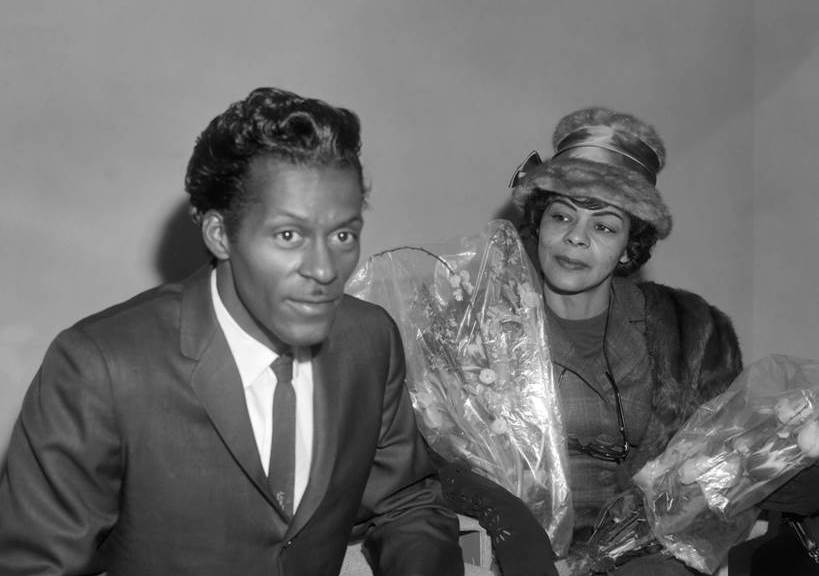
Chuck Berry 1926 – 2017

I didn’t realize until last week that Chuck Berry was from St. Louis, my home town. He grew up in what we would call “the city” and then moved to the burbs in the 60s.  This made me curious to find out who else was from what I usually refer to as “the armpit of the nation”. Here are just a few: Yogi Berra, Lou Brock, Vincent Price, Kevin Kline, Dick Gregory, Miles Davis, Harry Truman and Scott Joplin.  Some St. Louis folks also like to claim Maya Angelou, but she didn’t live in St. Louis all that long, so I’m not sure claiming her is playing fair.

I didn’t grow up in a musical family; while I knew who Chuck Berry was, I didn’t know very much about him or his musical history. I’ve honed my little bit of knowledge on Wikipedia and YouTube so now I wish I had paid more attention when he was alive.


What celebrity do you miss from your hometown?